Buying a new pan is just the beginning of the journey to delicious dishes. Regardless of whether you have chosen a steel, aluminum, or non-stick coating pan model, every pan requires proper preparation before its first use. In this guide, we will show you step-by-step how to do it so that your frying is healthy, tasty, and safe, and the pan serves you for a long time!
A pan straight from the shop is not ready for frying. Although it looks perfect, shiny and smelling new, it hides protective layers and potential contaminants from the production process. Removing them is the key to safe frying and its long-term use:
All pans require preparation before first use. Regardless of the type of pan, the steps are similar, but there are details that depend on the material of construction.
Every new pan, regardless of the material, has factory protection on its surface in the form of protective oils. Their task is to protect against rusting during transport and storage. However, before you start using the pan, you must remove them.
How to do it?
Cast iron and steel pans, especially those without non-stick coatings, require seasoning. This is a process that allows for the creation of a protective layer on the pan's surface, preventing food from sticking as well as corrosion.
How to season a pan?
This type of pan gains its non-stick properties precisely during this process, and thanks to seasoning, the pan will serve for years, offering even heat distribution and excellent frying results.
Non-stick coated pans also require special care during the first use. Although coating technology makes these pans easy to maintain, proper preparation will ensure their long-term use.
How to prepare a non-stick coated pan?
Such a process will help create a protective layer on the pan's surface, ensuring excellent non-stick properties and better durability.
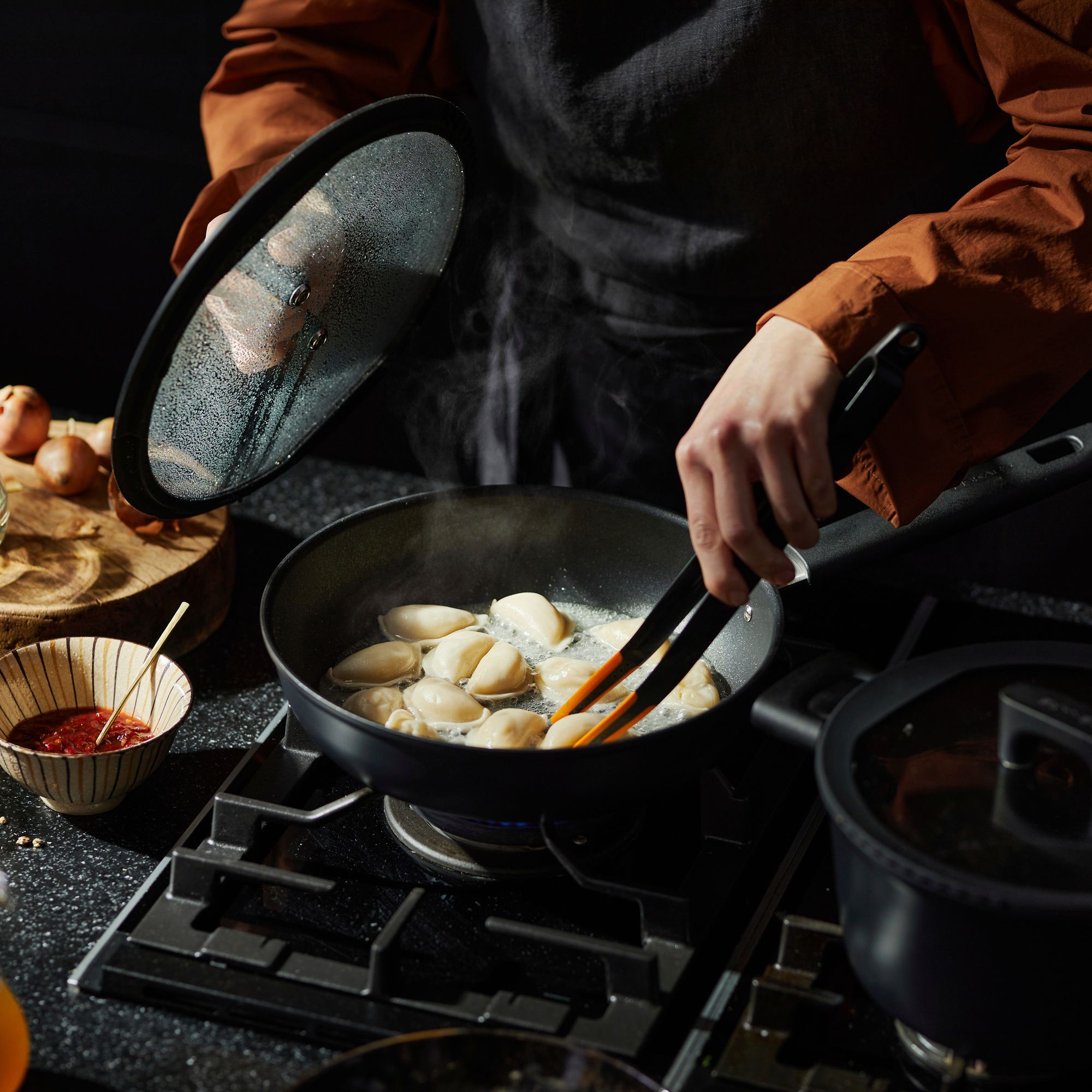
Before you start frying, it is worth making sure that our pan is properly heated to avoid food sticking. You should also remember a few other rules that affect the durability of the pan:
Proper care of the pan after its first use affects its durability and cooking quality. Regular care of the pan will allow for long-term use and achieving excellent results in the kitchen.
A few tips on how to take care of the pan:
Do induction pans require special preparation? Yes, you should make sure that the pan is compatible with induction. It is also worth checking if the bottom is evenly clean to ensure a good reaction to the magnetic field.
Does a new pan need to be seasoned?
Yes, some pans, especially cast iron ones, require seasoning before the first use to create a protective layer on their surface that prevents sticking and corrosion.
Can a pancake pan be used for other dishes? Yes, although it is specifically designed for frying pancakes, you can use it for other thin dishes, such as omelets or fritters.
Does an aluminum pan require special care? An aluminum pan is relatively easy to care for. However, you should avoid temperatures that are too high, which can damage the coating.
How often do I need to season a cast iron pan? It is recommended to season a cast iron pan from time to time, especially if you notice that food starts to stick or the pan starts to rust.
Can I use a steel pan on induction? Yes, steel pans are perfectly suitable for use on induction cooktops.
Can non-stick pans be washed in the dishwasher?
Usually yes, but you should check the pictogram on the packaging - very often pans with a Soft-touch handle are not recommended for dishwasher cleaning.