Domowe kiszenie kapusty od lat cieszy się popularnością, ponieważ pozwala przygotować naturalne przetwory o wyjątkowym smaku. Jednym z najważniejszych etapów całego procesu jest odpowiednie przygotowanie warzywa. Szatkowanie kapusty na zimę może być szybkie i wygodne, pod warunkiem że wykorzystasz właściwe narzędzia oraz poznasz kilka podstawowych zasad. Wiele osób kojarzy przygotowywanie kapusty do kiszenia z wielogodzinnym krojeniem. Nie musi tak jednak wyglądać. Dobrze dobrana szatkownica lub ostry nóż pozwalają uzyskać równe paski bez nadmiernego wysiłku i niepotrzebnego obciążania dłoni. Odpowiednie rozdrobnienie kapusty ma znaczenie nie tylko dla wyglądu gotowego produktu. Wpływa również na przebieg fermentacji, ilość uwalnianego soku oraz końcową chrupkość kiszonki. W tym poradniku wyjaśniamy, jak poszatkować kapustę do kiszenia, czym najlepiej ją kroić oraz jak zadbać o bezpieczeństwo podczas pracy z ostrymi narzędziami.
Although it might seem that simply chopping the vegetable finely is enough, the way the cabbage is prepared affects the entire pickling process. Pieces that are too thick may need more time for fermentation, while very thin strips soften faster and may lose their characteristic crunchiness. The best effect is achieved by uniform shredding. All pieces of cabbage should have a similar thickness, because then they release juice and respond to the salt at a similar rate. Even strips of cabbage also ensure that the finished silage has a pleasant structure. Each portion maintains similar elasticity, and the flavor is distributed evenly. For home pickling, thin strips about a few millimeters thick are most often chosen. This method of cutting allows the cabbage to release juice quickly and create the right environment for natural fermentation.
Before you start cutting, it is worth properly preparing the head of cabbage. This will make the work easier and the finished strips more even. The first step is to remove the outer leaves. They may be dirty, damaged, or dried out, so it is best to set them aside. Next, the cabbage should be thoroughly washed and dried. A large head of cabbage can be difficult to hold steadily while cutting. Therefore, it is best to cut it in half and then into smaller parts. Quarters are much more convenient to guide both on a shredder and when working with a knife. Before starting to shred, you should also remove the hard core. It is much more compact than the rest of the vegetable and can make uniform cutting difficult.
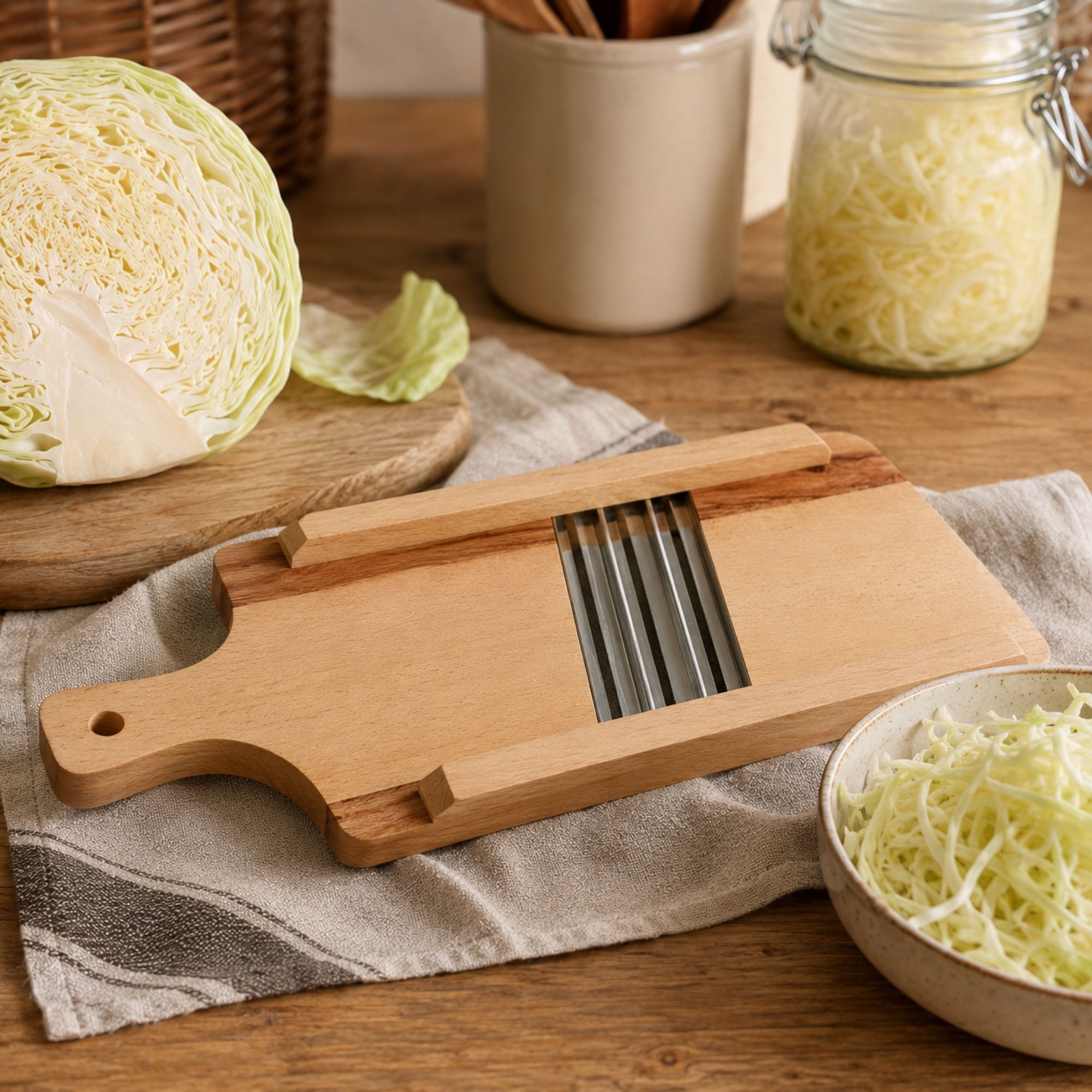
The choice of the right tool depends primarily on the amount of cabbage and the frequency of preparing home preserves. For larger quantities, a classic cabbage shredder works best. This solution was created specifically for this task. It allows you to quickly prepare a large amount of even strips and reduces the effort associated with manual cutting. Traditional shredders are equipped with sharp steel blades that slide over the surface of the vegetable, creating thin and regular pieces. Thanks to this, the cabbage is prepared much faster than when using an ordinary knife. If you are preparing smaller portions or want more control while cutting, a solid kitchen knife.
A shredder is one of the most popular accessories used when preparing home-made pickles. Its greatest advantage is the speed of operation and the repeatable effect. During manual cutting, it is difficult to maintain the same thickness of each piece. A shredder allows for more regular strips, which is especially important when preparing a larger amount of cabbage. A good quality model should have a stable construction and sharp blades made of durable material. Ease of use is also important – shredding should take place smoothly, without the need to use great force. When working with a shredder, you must remember about safety. The blades are very sharp, so the end of the vegetable should not be moved directly with the hand. It is worth using a protective handle that protects the fingers.
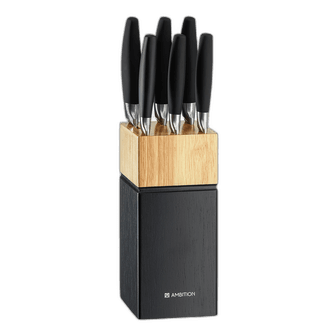
Not everyone needs a special device for preparing silage. For a smaller amount of cabbage, a sharp kitchen knife will also work very well. The most important thing is that the blade is properly sharpened. A dull knife will crush the cabbage fibers instead of cutting them, requiring more force and increasing the risk of accidental slipping during work. It is best to place the cabbage stably on a board with the flat side down. Then, guide the knife with even movements, trying to maintain a similar width for each strip. Knives with a wide blade work well for cutting large vegetables, providing greater control. A popular choice is, among others, the Santoku knife; its design facilitates precise cutting of vegetables and quick preparation of a larger amount of ingredients.
Although cutting cabbage seems like a simple task, several common mistakes can make the work harder or affect the quality of the prepared silage. One of the most common problems is using a dull knife. A blunt blade does not cut the vegetable fibers but crushes them. This requires more force and makes cutting less safe. Another mistake is unstable positioning of the cabbage. A large, round head can easily shift during work, so you should always prepare a flat cutting surface first. You should also not press too hard on the shredder. Sharp blades are designed to effectively cut through vegetables with proper guidance. Excessive force does not speed up the work and can cause uneven cutting. It is also worth remembering to clean the tools regularly. Leftover cabbage residue can dry out in hard-to-reach places and affect the hygiene of subsequent preparations.
How thinly should cabbage be shredded for pickling?
Most often, strips with a thickness of about 2–3 mm are chosen. This width allows the cabbage to release juice quickly, ferment evenly, and maintain a pleasant crunchiness.
Can cabbage be shredded with a regular knife?
Yes, for smaller quantities, a well-sharpened kitchen knife and a stable board are sufficient. For larger amounts of cabbage, however, a shredder will be a more convenient solution.
Why does the cabbage come out uneven during cutting?
The most common cause is a dull blade or improper tool guidance technique. It is also worth remembering to properly prepare the head; smaller pieces are easier to control during work.
Is a cabbage shredder necessary for home pickling?
It is not necessary, but it greatly facilitates the preparation of larger quantities of vegetables. It allows you to quickly obtain even strips and reduces the effort associated with manual cutting.
How to store the shredder after use?
It is best to store it in a dry place, protected from moisture. The blades should be clean and dry to maintain their properties for a long time.