Prepare seedlings for your greenhouse!
Growing tomatoes in a home garden is not only a passionate hobby but also a way to have healthy, ecological food straight from your own plot. However, the key to success is proper preparation – and it all starts with the seedlings. Why is it worth deciding on this step? Planting tomatoes from seedlings has many advantages, especially when we plan their later cultivation in a greenhouse. First of all, by starting from seedlings, we gain control over the entire growth process. We can precisely choose the varieties that will work best in our climate and greenhouse, as well as create ideal conditions for germination and early plant development. Thanks to this, tomatoes are stronger, more resistant to diseases, and ready to be transplanted into the greenhouse at the optimal moment. Greenhouse cultivation provides tomatoes with protection against unfavorable weather conditions and pests, and also allows for the extension of the growing season. This allows us to enjoy fresh tomatoes even outside the typical season. Tomato seedlings are therefore the first step to obtaining rich harvests and tasty, juicy fruits that will make our summer and autumn days more pleasant.
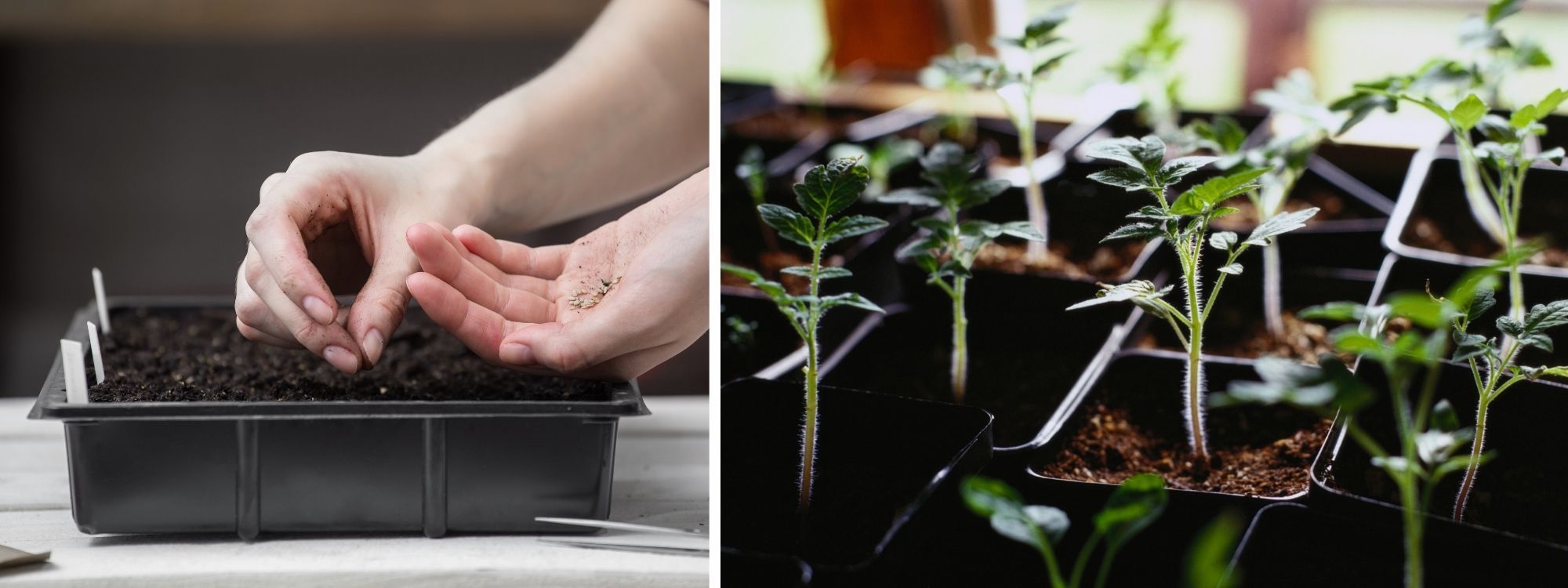
Seedlings are nothing more than young tomato plants grown from seeds in home conditions before being moved to their permanent cultivation site, such as a greenhouse. In the case of tomatoes, the seedling process should begin with sowing seeds into containers or boxes filled with soil and lasts until the plants become strong enough to be transplanted into the ground.
Seedlings are therefore extremely important in the process of growing tomatoes, especially when planning to continue their cultivation in a greenhouse. This is a stage that requires care and attention, but its results - healthy, strong plants ready for transplanting - are the key to success in obtaining abundant and tasty harvests.
Regardless of whether we are just starting our adventure with growing tomatoes or doing it for the next time in a row, one of the most important questions we ask ourselves is: when exactly to sow seeds for seedlings? A properly selected period for sowing tomato seeds at home is very important to provide them with appropriate conditions for growth and an optimal start to the growing season. As a rule, seeds should be sown for seedlings 6 to 8 weeks before the predicted date of the last spring frosts, therefore the best time to start sowing tomatoes is at the end of February or the beginning of March. Remember that planting too early can lead to excessive plant growth; we can provide particularly good growth conditions for our seedlings in a greenhouse.
Planting tomato seeds at a depth of 0.5 to 1 cm ensures the right balance between access to light, necessary for germination, and maintaining moisture and heat, which are key for root growth. Planting too shallow can cause the seeds to dry out, while planting too deep will prevent germination or significantly delay it.
Deciding on the right tomato varieties for greenhouse cultivation is half the battle to achieving success in growing. Greenhouses provide ideal growing conditions for most tomato varieties, but it is crucial to select those that best suit our needs and growing conditions. When making decisions about choosing specific varieties, we may encounter the terms "determinate" and "indeterminate". Although both terms may seem complicated to us, they are not at all. The difference between them lies only in the way the plants themselves grow, but the choice of a specific one can have a major impact on how we grow them and what our yields will be. Determinate tomatoes, it can be said, have their own specific growth plan: they develop up to a certain point, reach a specific height, and then stop their growth. This is a great option for those who have less space in the greenhouse or want to harvest the entire crop quickly. On the other hand, indeterminate tomatoes grow continuously throughout the season and keep climbing upwards. These plants require more space and attention, but in return offer gradual harvests over a long period of time. In greenhouse cultivation, both types have their advantages. Choosing the right type depends on individual needs, available space, and how much time we want to devote to caring for the plants.
When choosing between determinate and indeterminate tomatoes, it is important to consider your space, time availability, and harvest preferences. Each type has its advantages and can be effectively used in greenhouse cultivation, providing satisfaction from home-grown, tasty tomatoes.
A thick and strong stem is key to healthy plant growth and abundant yields; to achieve this, several proven tricks should be applied:
After pricking out, tomatoes require regular and moderate watering to keep the soil moist but not waterlogged. It is also important to provide them with plenty of light, especially if natural light is limited. Maintain a stable, warm temperature, preferably in the range of 18-22°C. Regular transplanting into larger containers as the plants grow will also be necessary to provide them with enough space to develop.
To speed up the growth of tomato seedlings, provide them with plenty of light for 14-16 hours a day - if necessary, it is worth using plant lamps. Maintain the temperature in the range of 20-22°C during the day and slightly lower at night, around 16-18°C. Water the seedlings moderately, keeping the soil moist but not waterlogged. Good air circulation is also important, so provide a light airflow to strengthen the stems and improve the overall condition of the plants.
The best time to prick out tomatoes, which means transplanting them from the small container in which they germinated to a larger one so they have more room to grow, is when the seedlings already have at least 2-3 true leaves in addition to the seed leaves. This usually happens about 2-3 weeks after germination. At this time, the plants are already strong enough to withstand the move, and their roots are starting to need more space to develop.